

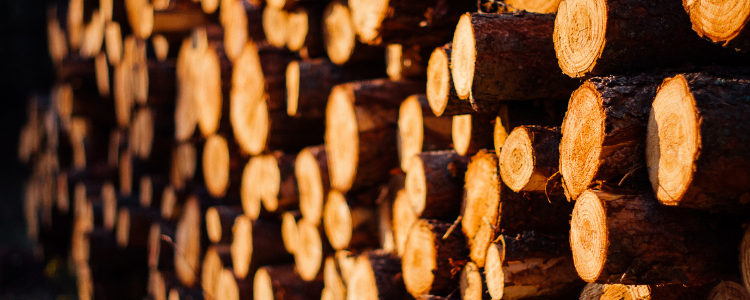
The Best Wood for Your Infrared Sauna
When it comes to choosing the right infrared sauna, the wood plays a crucial role.
It not only determines the appearance and feel inside the cabin, but if a wood that is too cheap or unsuitable is chosen, you won't enjoy your infrared sauna for long.
But how do you know which of the many wood types is best for your infrared sauna?
That depends entirely on your needs - and, of course, your budget.
What to Consider When Choosing Wood for Infrared Saunas?
Infrared saunas should always use real wood. In principle, a type of wood for an infrared sauna (or sauna) must meet these criteria:
- The wood is durable and long-lasting
- It can withstand large temperature differences and humidity
- Sweat and moisture do not cause unsightly stains
- The wood does not mold, splinter, or resin, and has few to no knots
- The wood should not get unpleasantly hot during use
- The wood maintains the temperature in the infrared sauna and insulates well
Your Personal Requirements for Choosing the Best Wood
Additionally, there are personal preferences that play a role in selecting the right wood. Ask yourself:
- Do you want a woody scent or a neutral smell?
- Do you prefer dark or light wood?
- Is it important to you to use the best possible, most durable wood?
- How important are sustainability and a short supply chain for the wood to you?
Which Wood is Best Suited for an Infrared Sauna?
In principle, many types of wood meet the requirements for an infrared sauna. But, of course, there are important differences.
Typical wood types for infrared saunas are spruce, Swiss pine, cedar, and hemlock wood.
You can see the properties of the different types of wood in our comparison. At the end, we will give you a recommendation for the best type of wood for your infrared sauna.
Spruce Wood as a Good and Affordable Option
If you are price-conscious and also want to use a European wood type, spruce wood is a good choice for your infrared sauna. Pine wood is also used and is very similar to spruce wood. Both of these woods are extremely hard and less susceptible to dents or impacts, which can occur during the assembly or disassembly of an infrared sauna, among other things.
Spruce wood is very stable and dense, making it well-suited for the demands of an infrared sauna. Visually, it features rather light wood. Furthermore, it is 99% hypoallergenic, making it particularly suitable if you might be allergic to the smells and scents of a wood type. Due to this property, spruce is also largely odor-neutral, even under the influence of rising temperatures.
Due to its hardness, spruce wood is somewhat more prone to staining and therefore not particularly moisture-resistant. For this reason, we recommend having a towel on the bench and on the floor during each sauna session to absorb most of the moisture directly and reduce its impact on the wood. It is also advisable to leave the sauna on for another 10 minutes after use to reduce residual moisture.
Stains can also be removed with proper cleaning of the wood. However, with regular use and without using towels in the infrared sauna, this can be time-consuming.
Aromatic Swiss Pine with Limitations
Many people like the look of Swiss pine. This type of wood is very robust and has a rather soft surface, which is well-suited for benches.
Swiss pine resins very little, is moisture-resistant, and even antibacterial. It does not tend to stain.
The special scent of Swiss pine makes all the difference for its lovers and is often the most important argument for choosing Swiss pine for an infrared sauna.
Hemlock - A High-Quality Wood from Canada and the USA
Hemlock wood, along with cedar, is considered one of the most noble woods for infrared saunas.
It comes from the USA or Canada. The hemlock fir provides a robust, resin-free wood type without knots. Its wood is particularly flexible and thus lends itself to beautiful rounded designs.
In addition, hemlock wood is moisture-resistant and good at warding off fungi and mold.
Another special feature is the high density of the material. Therefore, infrared saunas made with hemlock wood are good at retaining heat. Visually, hemlock wood can range from reddish-gray to a yellowish-brown, so there are various options.
A decisive characteristic of hemlock wood is that it has no smell. So, if you don't want any special wood aromas in your infrared sauna, both spruce wood or hemlock wood could be the right choice for you.
Cedar Wood - A Luxurious Wood with Excellent Properties
Cedar wood undoubtedly provides the most luxurious experience in an infrared sauna. Cedar wood has a long tradition in the construction of saunas and infrared cabins, thanks to its truly outstanding properties.
Cedar wood is a very soft, dense wood that optimally withstands moisture and also insulates heat very well. It is resin-free and has no knots, which results in a smooth appearance.
Of all wood types, cedar wood is the most durable. You can enjoy an infrared sauna made of cedar wood for decades.
It's no coincidence that at Clearlight, we rely on eco-certified cedar wood from Canada for all our full-spectrum Sanctuary models.
However, the very special thing about cedar wood is the oil it contains, which has garnered it many fans. Cedar oil not only smells wonderfully aromatic but also has natural antibacterial effects. This optimally protects your infrared sauna against mold and fungi.
Additionally, the essential cedar oil has healing and cleansing properties that optimally support your detoxification during the use of the infrared sauna. Of course, these oils also create a very special fragrance experience that many people find very relaxing.
By the way, you can maintain this scent for a long time by simply lightly sanding the interior wood of the cabin after a few years. This releases more oils again, and the pleasant scent is preserved.
Visually, cedar wood is also an interesting option. Cedar wood is available in many different colors - from light honey to deep walnut tones.
Incidentally: If you read that a manufacturer's cabin is made of Siberian cedar, caution is advised. This is because it is actually a type of pine.
Recommendation: Which Wood Type is the Best?
An infrared sauna has many health benefits. The wood also plays a role here. The optimal wood for an infrared sauna should be moisture-resistant and temperature-resistant.
Additionally, it should be resin-free and without knots, insulate well, and have a soft surface.
The best wood type is clearly cedar wood, followed by hemlock wood, and then spruce wood. If you prefer an aromatic experience, cedar wood in all its beautiful shades will appeal to you.



Share:
Can a sauna and infrared cabin help with stress?
How an infrared sauna can help you with a cold