

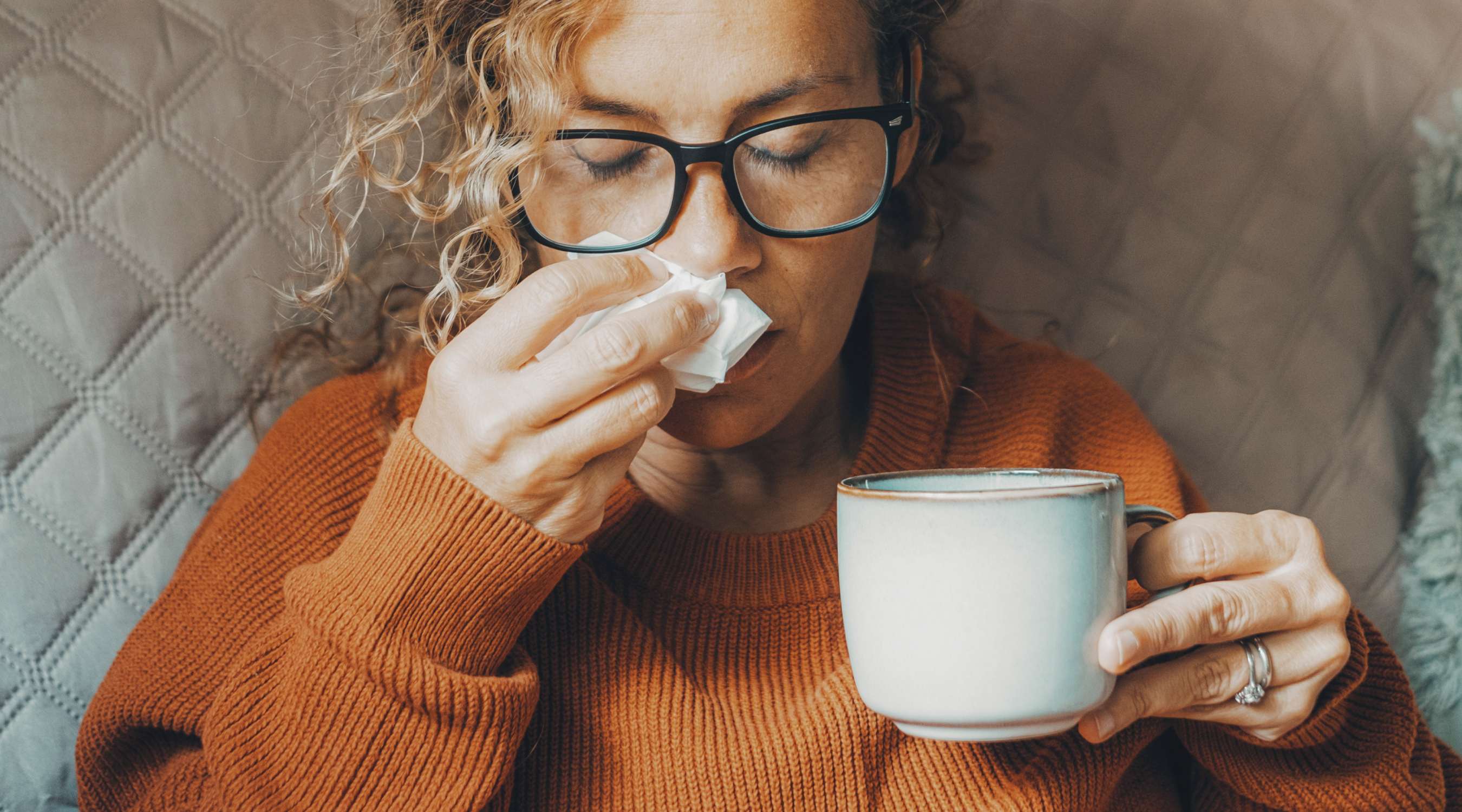
Colds are an annoying side effect, especially in the winter months, which most people experience once or several times a year. There are various home remedies and medicines that promise to relieve symptoms, but often fail to deliver.
For example, infrared cabins can have positive effects on the course of a cold. You can find out more in this article.
Causes and symptoms of a cold
In most cases, colds are harmless, run their course without complications, and heal on their own within seven to ten days.1
Development of colds
The term "cold" is actually incorrect, as it is not the cold itself that causes the illness. Colds are always caused by viruses, with approximately 200 different viruses that cause this unpleasant condition.
Nevertheless, cold can contribute to the development of a cold. When you are outside in the winter months, the mucous membranes of the respiratory tract cool down, which weakens the immune barrier. This makes it easier for viruses to infect the mucous membranes.
Another reason why colds occur mainly in winter is that the humidity in heated rooms is low, which leads to drying out of the mucous membranes. This also promotes a viral infection in the nose and throat.
Cold symptoms
Colds affect the mucous membranes of the upper respiratory tract. The nose is blocked and/or runny, one has a sore throat and, if the larynx is also affected, suffers from hoarseness.
Bronchitis often develops, the main symptom of which is an often persistent cough.
However, in people with chronic respiratory diseases (such as asthma), the otherwise harmless cold can also lead to more severe complications and longer illness durations.
The paranasal sinuses are also often affected, especially if bacteria multiply on the mucous membrane damaged by viruses. In severe cases, these bacteria can also cause pneumonia. An ear infection can also be a consequence of a cold.
Fever
Sometimes colds are also accompanied by fever.
Fever causes some unpleasant symptoms. When it is just starting, one feels cold or has chills. When the fever breaks, one feels hot, sweats, and the circulation is weakened.
Feverish patients are tired, have headaches and body aches, and suffer from loss of appetite.
However, fever plays an important role in fighting pathogens and is therefore a desirable and expedient reaction of the body. The immune system is activated, and the multiplication of viruses and bacteria is inhibited.
Increased body temperature and fever are therefore usually a sensible and positive reaction of the body.
How does infrared affect colds?
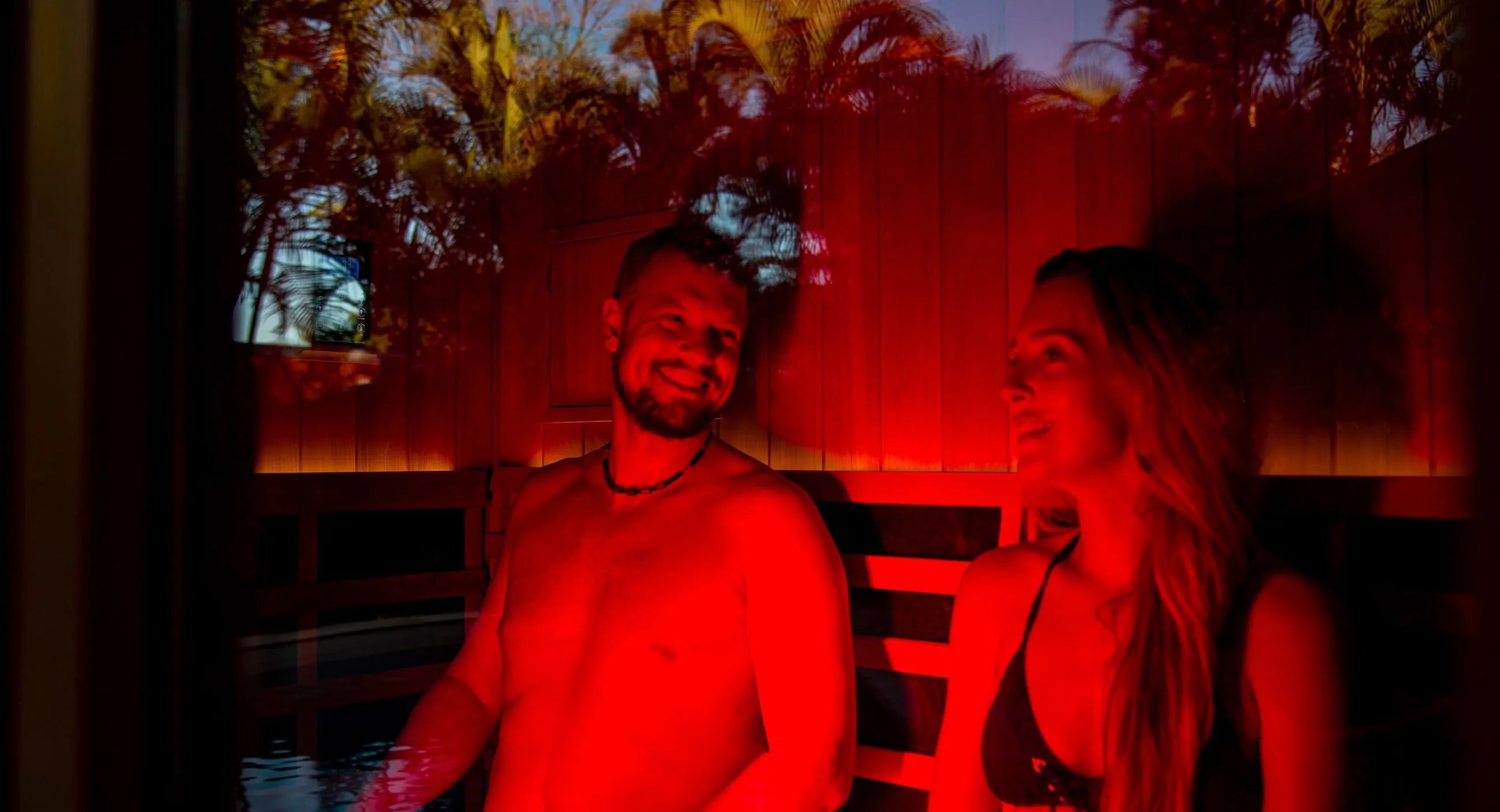
Staying in an infrared sauna increases body temperature and has a similar effect to a mild fever: pathogens are killed, and the immune system is boosted. Unlike fever, however, you do not experience any unpleasant side effects in an infrared sauna, and the increase in body temperature is temporary.
Infrared light also improves energy metabolism and thus the performance of many body cells, which has a positive effect on the cells of the immune system, the white blood cells. For example, immune cells can produce more antibodies against viruses and bacteria.
The ideal application of an infrared sauna for acute colds
If you already regularly use a red light sauna, you can maintain your sauna habits and use the infrared cabin daily, provided you do not have any other acute or chronic illnesses or high fever apart from a mild cold.
If you are unsure whether a stay in the heat cabin is suitable for treating your cold, please consult your doctor.
However, you will also notice for yourself whether the sauna does you good.
In any case, it is important to drink enough fluids! Due to both the cold and the stimulation of various bodily functions and sweating in the infrared sauna, the body has an increased fluid requirement that must be compensated.
Advantages of an IR cabin over a traditional sauna for colds
In a traditional sauna, a very high air temperature is generated. Some people find this unpleasant, and in the case of a cold, the body can be overstrained as a result.
In an infrared sauna, the air temperature is lower and therefore more pleasant. The body absorbs the infrared radiation and is thus warmed from within.
Prevention of colds with the help of the infrared sauna
By creating an artificial fever, the infrared sauna can also play an important role in the prevention of colds.5
Strengthening the immune system
The already mentioned strengthening of the immune system not only helps to defeat a viral infection of the upper respiratory tract faster - the probability of getting a cold at all also decreases with regular use of the infrared cabin.
Among other things, infrared light improves blood circulation, which is important so that immune cells and substances can quickly reach the site of infection.
Also, cell regeneration is improved by infrared light, so that damaged, infected cells are repaired or replaced faster.
Stress reduction and restful sleep
Important factors for a well-functioning immune system are also relaxation and good sleep.
A stay in an infrared sauna is relaxing. You feel the pleasant warmth and have a break from often stressful everyday life. The production of the stress hormone cortisol, which can impair the immune system, is reduced.
Deep sleep helps to increase and improve the function of immune cells that are primarily active against viruses. Therefore, it is particularly important in the winter months to ensure sufficient good sleep so that cold viruses can be effectively warded off.
The production of the sleep-promoting hormone melatonin is increased by infrared radiation, which leads to better sleep quality.
Red light therapy in the sauna as an additional extra against colds
In addition to the positive effects of the infrared sauna on the entire organism, red light therapy can also have an indirectly positive effect on the course of a cold.
Studies have shown that exposure to red light can help regulate sleep rhythm.10 With improved sleep quality, illnesses can also be cured faster.
Conclusion
Hardly anyone is spared from colds. Mostly, the disease is harmless and heals on its own. But its symptoms can be very unpleasant and affect daily life, sleep, and ability to work.
Infrared light helps to strengthen the body's immune defense and mobilize it, especially against viral infections.
Regular stays in the infrared sauna reduce the likelihood of catching a cold, and if it does happen, they can help the body fight cold viruses.
_____
Sources:
- https://www.ncbi.nlm.nih.gov/pmc/articles/PMC7117077/pdf/10-1055-s-0042-116112.pdf
- https://www.ncbi.nlm.nih.gov/pmc/articles/PMC7112468/pdf/main.pdf
- https://flexikon.doccheck.com/de/Fieber?utm_source=www.doccheck.flexikon&utm_medium=web&utm_campaign=DC%2Bsearch
- https://www.ncbi.nlm.nih.gov/pmc/articles/PMC4786079/pdf/nihms755275.pdf
- https://www.ncbi.nlm.nih.gov/pmc/articles/PMC4145646/pdf/WJCP-1-29.pdf
- https://www.ncbi.nlm.nih.gov/pmc/articles/PMC2718593/
- https://www.ncbi.nlm.nih.gov/pmc/articles/PMC4493260/pdf/40064_2015_Article_1093.pdf
- https://pubmed.ncbi.nlm.nih.gov/15157951/
- https://pubmed.ncbi.nlm.nih.gov/2248758/
- https://www.ncbi.nlm.nih.gov/pmc/articles/PMC3499892/pdf/i1062-6050-47-6-673.pdf
- https://flexikon.doccheck.com/de/Infrarottherapie?utm_source=www.doccheck.flexikon&utm_medium=web&utm_campaign=DC%2BSearch

Share:
Can a sauna and infrared cabin help with stress?
How often can you use an infrared sauna?