







In a world that is constantly active, stress rarely announces itself loudly. More often, it manifests as tense muscles, shallow breathing, restless sleep, or a nervous system that never truly switches off. Constant stimulation, long working days, and digital overload keep the body in a persistent state of low-level alert, making true recovery difficult to achieve.
This is precisely why conscious breaks are so important. We're not talking about distractions, but environments that signal to the body that it's safe to power down. Using an infrared sauna offers one of the most direct ways to generate this signal. It uses heat to activate the body's natural relaxation pathways, rather than relying solely on willpower.
How Infrared Heat Supports Relaxation (What Happens in the Body)
Infrared heat works differently from conventional heat. Instead of just warming the surrounding air, infrared waves penetrate deeper into the body. They gently raise the core temperature and trigger a series of physiological responses associated with relaxation and recovery.
Research shows what happens beneath the surface:
-
Muscle Relaxation: Heat promotes blood flow to muscles and connective tissue. This can help alleviate tension, stiffness, and discomfort, which are common physical signs of stress.
-
Nervous System Shift: Warming the body can support the activation of the parasympathetic nervous system (the "rest and digest" state), helping the body to shift out of alarm mode.
-
Stress Hormone Signalling Support: Regular heat exposure has been linked to supporting natural cortisol management, which can contribute to a calmer baseline mood in the long run.
-
Improved Circulation: As blood vessels dilate, oxygen and nutrients are distributed more efficiently throughout the body. This can support both physical well-being and mental clarity.
-
Sleep Support: The rise and fall in body temperature after an infrared sauna session mirrors natural circadian rhythms, which can contribute to deeper, more restorative sleep.
Together, these effects explain why many people feel mentally calmer and physically lighter after a session, even without actively trying to relax.
Relaxation isn't passive – it's physiological
 Mindfulness, meditation, and relaxation practices are often discussed as mental skills, but the body plays a central role. A tense nervous system makes it difficult to pause. Infrared heat helps by first working with the body: it alleviates physical tension and reduces sensory noise, allowing mental relaxation to follow naturally.
This is why using an infrared sauna is often compared to light to moderate physical activity. Heat exposure increases heart rate and blood flow, subsequently aiding recovery. When used after exercise or during periods of high stress, these effects may potentially be amplified.
Many users describe the time in the infrared sauna as effortless meditation: eyes closed, breathing deepens, thoughts slow down. Not because they are "doing everything right," but because their physiology allows it.
As you'll soon discover, there are a number of wellness benefits when we actively address stress and embrace a genuine form of relaxation – one that we believe is best fostered by an infrared sauna.
KOSTENLOSES E-BOOK
Infrarotsauna oder traditionelle Sauna? Der ehrliche Vergleich
Wärme, Kosten, Gesundheit und Aufbau direkt gegenübergestellt, als kostenloses E-Book.

What are the risks of persistent stress?
Short periods of stress are part of normal human function. Cortisol helps us respond quickly to challenges. The problem arises when stress becomes chronic.
When we are exposed to one or more personal stressors, our body releases the hormone cortisol into the bloodstream, which alerts the body to respond to a potentially threatening situation. Increased cortisol raises heart rate and blood pressure and provides the brain with adrenaline and glucose to deal with these situations.
The National Institute of Mental Health (NIMH) points out that persistent stress prevents the body from returning to its baseline state, which can increase the risk of anxiety, sleep disorders, digestive problems, headaches, and circulatory strain. Over time, this also affects concentration, mood, and productivity.
How does relaxation promote your health?
The Mayo Clinic recommends that learning to identify the causes of stress, as well as developing self-care strategies to manage the signs of stress, are some of the best methods to combat stress and lead a healthier life. We are convinced that taking a break from the stressful daily routine in an infrared sauna has a positive effect on stress management for two main reasons.
The first reason is based on the physiological benefits of infrared saunas, supported by peer-reviewed medical evidence. One of the most important recommendations for stress reduction is physical activity, and infrared saunas put our bodies in a state very similar to light exercise. When an infrared sauna session is added to the end of a workout, these positive effects may potentially be amplified.
On a personal level, we are convinced that users, even new ones, experience a feeling bordering on meditation when using an infrared sauna. More experienced users may be familiar with breathing exercises and even meditation in the infrared sauna. Deep breathing helps to calm the body and can support cortisol management, while increasing the amount of oxygen-rich blood available to the body – and the brain – to process thoughts and enter a deep meditative state.
What productivity benefits does relaxation bring?
If you feel overwhelmed at work, it's likely that one or more stress triggers are impacting your productivity. Some sources state that stress can reduce our overall productivity at work by an astonishing 77%, which also translates into higher absenteeism and a decline in organizational morale and culture.
If you take steps to reduce sources of stress in your life and address them with a meditative practice like using an infrared sauna, it's plausible that your overall productivity will increase and your attitude towards your work tasks will become more positive. A peaceful, relaxed mindset is best fostered by a healthy diet, regular exercise, and at least eight hours of sleep per night. However, this can be further strengthened by applications such as the infrared sauna to give your body an extra boost in the right direction.
This is where the infrared sauna comes in
Using an infrared cabin does not replace healthy habits such as sleep, exercise, and nutrition. It is a complementary tool that creates a consistent, repeatable environment for decompressing the body.
With regular use, sessions in an infrared cabin can:
-
support nervous system regulation
-
promote deeper physical relaxation
-
support sleep quality
-
help to balance the physiological burden of chronic stress
This brings us to the practical part.
A simple application recommendation for stress & relaxation
Before entering the infrared cabin:
-
Ensure you are well-hydrated.
-
If possible, prepare relaxing music to play in the background; here's what we recommend: [Link to music]
-
Take a lukewarm shower to wash off any dirt or grime and warm up your core temperature.
-
Note the time and enter the infrared cabin.
During your session:
-
Close your eyes and begin to breathe deeply.
-
Inhale for six seconds through your nose or mouth, hold your breath, and then release it.
-
Repeat the process for the next ten minutes or more.
-
Stay in the infrared cabin as long as you feel comfortable; between 25 and 45 minutes (if you cannot tolerate the heat, try to finish your session with the door open).
After your session:
-
Take your time exiting the infrared cabin; shower if you wish, otherwise dry off and continue listening to relaxing music.
-
Avoid returning immediately to screens or tasks.
-
Ensure you hydrate sufficiently.
How long should you sit in the infrared cabin for proper relaxation?
We recommend all new infrared cabin users spend about 20–25 minutes in the cabin and observe their body for any unwanted signs. If your body gives you warning signs to exit before the 25-minute mark, follow these signs and leave the cabin. More experienced users can spend 30–45 minutes in the cabin to give body and mind sufficient time to relax.
What are other ways to reduce stress in our lives?
According to the Mayo Clinic, one of the most effective methods for stress reduction is a lifestyle that promotes healthy eating, sufficient exercise, and sleep. The clinic also recommends:
-
Practice relaxation techniques such as deep breathing, meditation, or yoga (we believe this is also beneficial while using the infrared cabin).
-
Keep a journal to record your thoughts and what you are grateful for in your life.
-
Set aside time in your schedule for a hobby such as reading.
-
Cultivate close relationships with your friends and family.
-
Volunteer in your community.
-
Create a diary or schedule for your work and private life; remove any items that are not necessary.
-
Check off these items as you achieve them and reward yourself.
-
Seek help and advice if your sources of stress are constant.
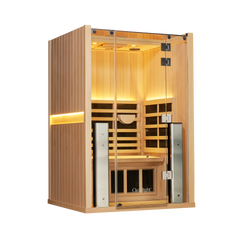
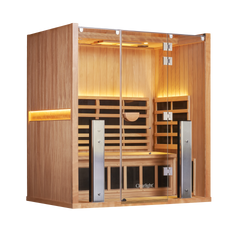
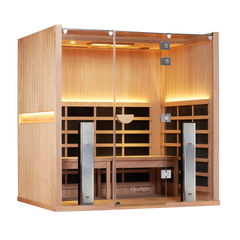
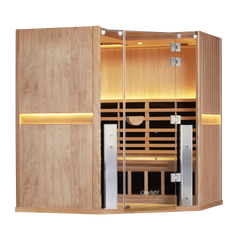
If you are interested in an infrared cabin for your home, take a look at our range of full-spectrum, far-infrared, and outdoor cabins.
If you are struggling with significant stress in your life, know that you are not alone. Please contact TelefonSeelsorge (0800 / 111 0 111 or 0800 / 111 0 222).


