

Winter brings shorter days, less sunlight, lower temperatures, and noticeable changes in our well-being. Many people experience a decrease in energy and motivation, outdoor routines change, and the body needs additional support to stay balanced. During this season, conscious wellness rituals prove particularly valuable.
This is where red light therapy comes in. While it can offer benefits year-round, it is particularly helpful for many people in winter—when natural light is limited and the body is under greater seasonal stress.
This article explains what red light therapy is, how it works, its general benefits, why it is particularly useful in winter, how often it should be used, and why combining it with infrared sauna sessions can further enhance the overall experience.
What is Red Light Therapy?
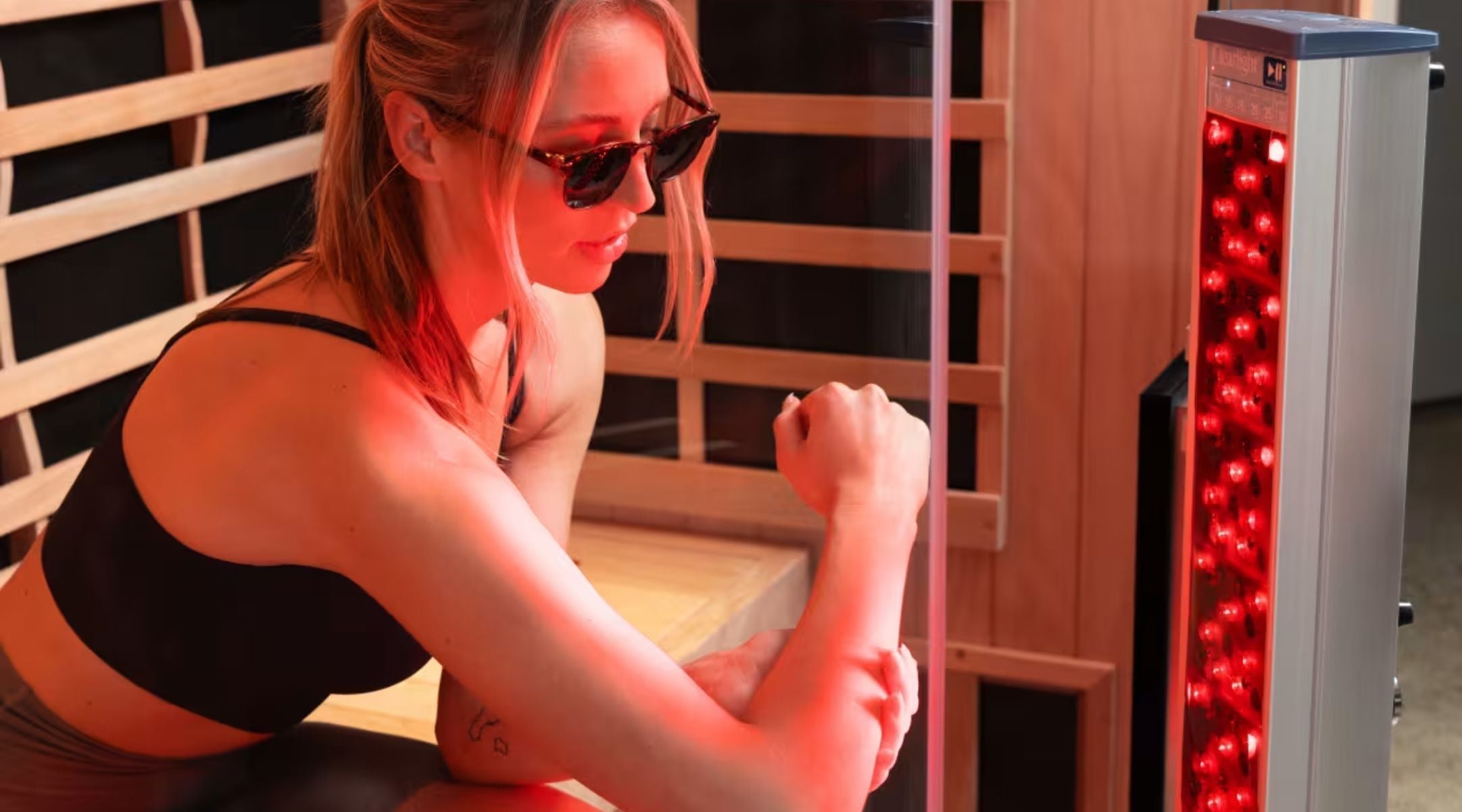
 Red light therapy uses specific wavelengths of visible red and near-infrared light to provide gentle, non-invasive light energy. This process, known as photobiomodulation, describes the interaction of light and cells, which can support natural biological functions. Unlike UV light, red and near-infrared wavelengths do not damage the skin. Instead, they are absorbed by tissues and can positively influence cellular processes.
High-quality red light devices use LEDs to deliver consistent and concentrated wavelengths into skin and muscle tissue. The application is calm, non-invasive, and occurs without significant heat generation. A session typically lasts ten to twenty minutes, making it easy to integrate into a daily routine.
General Benefits of Red Light Therapy
Scientific studies have explored a variety of potential applications for red and near-infrared light. Although results vary depending on the individual and study, findings suggest that red light therapy can support the following areas:
Cellular Energy Production
Red and near-infrared light affects the mitochondria – the energy centers of cells. Improved cellular energy can promote regeneration, cognitive performance, and overall well-being.
Blood Circulation and Tissue Oxygenation
Light can stimulate local blood circulation and oxygen supply, which can support daily performance and recovery.
Skin Support
Red light is often used to promote skin health – research focuses on collagen formation, skin tone, and overall skin quality, among other things.
Relaxation and Well-being
Many people find red light calming and grounding, similar to meditation or breathing techniques. The regularity of application is particularly crucial here.
All this happens without UV radiation and without significant heat generation – the effect is created by light at precise wavelengths.
Why Red Light Therapy Can Be Particularly Helpful in Winter
Winter brings less daylight and limited sun exposure. For many, this means less time outdoors, lower vitamin D levels, and fewer natural light stimuli that support energy levels, mood, and sleep patterns.
While red light therapy does not replace sunlight, it provides targeted light impulses that can further support the body in winter. Research points to a strong connection between light and seasonal well-being – for example, in regulating circadian rhythms, energy, sleep, and mood.
Many people use red light therapy in winter to:
-
receive consistent light impulses when daylight is scarce
-
support regeneration and performance when outdoor training decreases
-
care for their skin during the cold, dry season
-
build structure and routine for overall well-being
The application can be effortlessly integrated into a morning or evening routine.
How Often Should Red Light Therapy Be Used?
The best results usually come from regularity – not particularly long sessions. Many experts recommend short, recurring applications several times a week, for example:
-
10–20 minutes per session*
-
3–5 sessions per week
Some prefer to use their device daily for shorter periods. Since red light therapy is non-invasive, it can be easily combined with existing rituals – such as meditation, stretching, breathing exercises, or after training.
The ideal duration largely depends on the distance to the device. At about 20 cm distance, about 10 minutes are often sufficient. At 40 cm, it may be advisable to double the duration. After about 10–20 minutes, the tissue has generally absorbed enough light – longer sessions are usually found to be more pleasant but generally offer only limited additional benefits.
The Added Benefit: Red Light Therapy and Infrared Sauna in Combination
 Infrared saunas use gentle far and near-infrared waves that directly heat the body. This can support relaxation, circulation, regeneration, and mental recovery. Many people find the combination of infrared heat and red light particularly holistic.
Why both applications harmonize so well:
Targeted light plus soothing warmth
Red light works at a cellular level, while infrared heat can support circulation, regeneration, and mental relaxation. Together, they address different physiological processes.
A Structured Wellness Ritual
Especially in winter, consistent routines are crucial. A short sauna session, followed by red light, can create a soothing ritual with high consistency.
Comfort in the Cold Season
Infrared heat provides comfort, while red light gently balances without generating additional strong heat.
Flexible Application
Whether sauna first and then red light, or vice versa – both are possible. Regularity is key, not the order.
A Winter Wellness Routine with Red Light Therapy
A possible weekly schedule could look like this:
-
2–4 infrared sauna sessions per week
-
3–5 red light sessions per week
-
Integration of: hydration, stretching, breathing exercises
-
morning sessions for energy
-
evening sessions for relaxation
Red light and infrared heat complement healthy lifestyle habits such as strength training, cold therapy, mindfulness, and balanced nutrition.
Throughout winter, it often becomes clear that small, consistent habits are more effective than large, short-lived changes. Red light therapy supports the body with gentle, non-invasive light, while an infrared sauna promotes warmth, regeneration, and relaxation.
Together, both applications form a wellness routine that can be effortlessly integrated into daily life – and whose benefits can remain noticeable for many people long after winter.
* General guidelines for healthy adults. The ideal frequency of use may vary individually. In case of existing health conditions or uncertainties, medical advice should be sought before use.
Share:
The combined benefits of red light therapy and infrared saunas
Red Bull and Clearlight® Redefine Athlete Recovery