

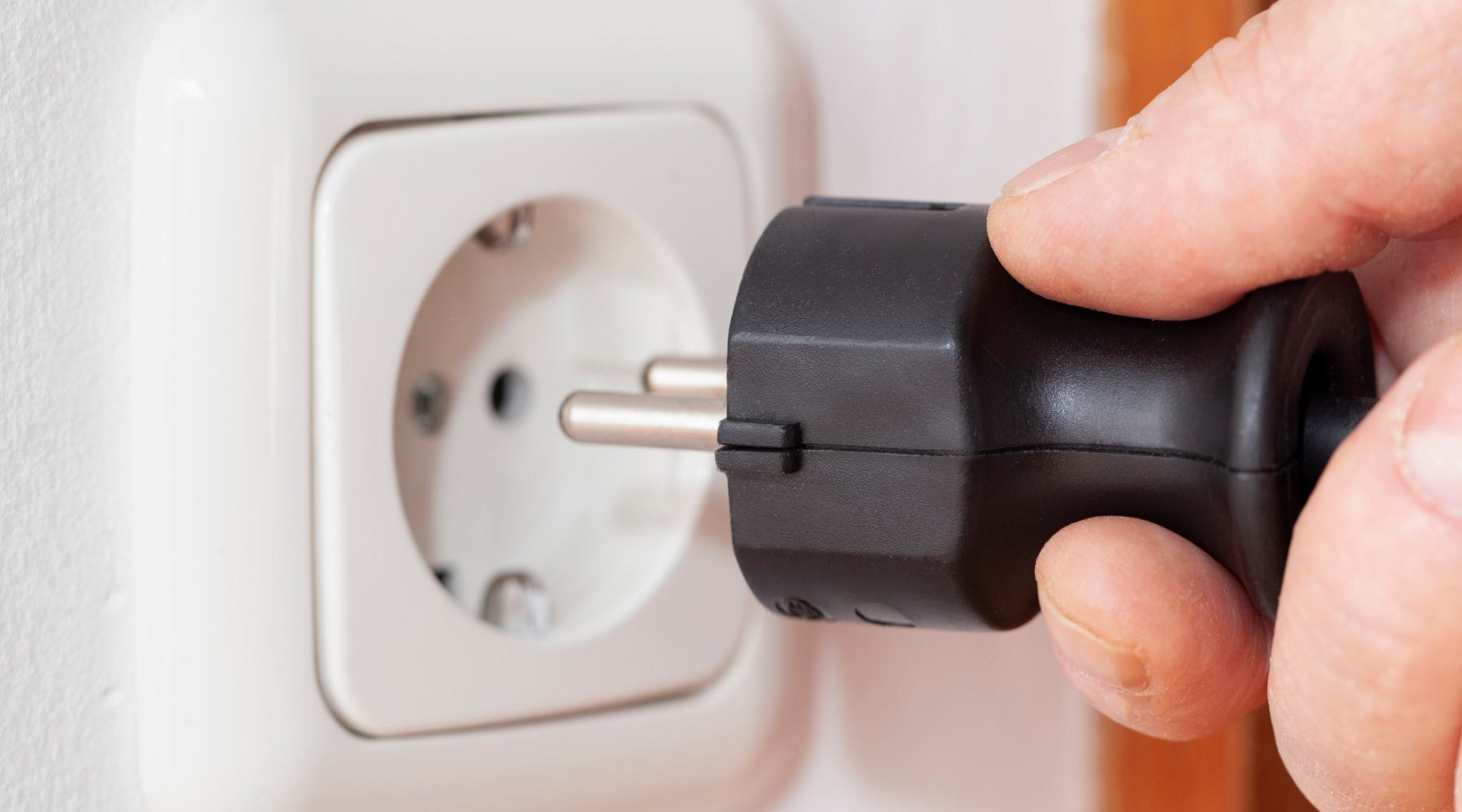
Especially from today's perspective, the infrared cabin is a more energy-efficient and sustainable alternative than the traditional sauna.
The question of "sauna power consumption" is a recurring one in our company, probably coming up in every second or third conversation.
That's why I've decided to discuss this topic and provide some facts and thought-starters. By the end of the blog, you'll hopefully feel confident in calculating power consumption. We have also developed a calculator for you, with which you can quickly determine the power consumption of any Clearlight infrared cabin:
Calculator for Infrared Sauna Electricity Costs
How to Use the Electricity Cost Calculator
1. Select the desired model from the drop-down menu.
2. Enter the time you want to use the sauna (in minutes).
3. Enter your electricity cost per kWh. If you are unsure, we recommend an assumption of 0.35€ per kWh. (As of April 2023)
4. Click the "Calculate" button to get an estimate of the total cost.
Please note, however, that this estimate does not include any fees or tariff costs from your energy provider. The actual cost of using your sauna may be higher or lower than the estimated cost.
A brief technical digression to understand sauna power consumption is necessary:
The energy consumption for an electrical device, or the consumption in your home or apartment, is given in "kilowatt-hours" (kWh). The word "kilo" is derived from the ancient Greek word for "thousand" and therefore refers to the quantity.
The word Watt describes the power of an appliance. An infrared sauna, for example, can have a power of 1,800 Watts.
To simplify this information: 1 kWh corresponds to the energy consumption of a device with 1,000 Watts of power, which is switched on for one hour and therefore consumes electricity.
As a concrete example, the following calculation can be helpful:
Let's assume you have a vacuum cleaner with 1000W of power. If you were to vacuum for one hour, that would correspond to an energy requirement of 1kWh of electricity consumed during the usage period.
But now to the core of the article...
What is the power consumption of an infrared sauna?
According to the same formula, the power requirement for an infrared sauna can be quickly determined. At Clearlight, we have various infrared cabins, depending on the size and equipment of the infrared cabin.
I will therefore calculate the power consumption for a 1-person infrared cabin, as well as the power consumption for a 4-person infrared cabin for comparison.
The electrical power of the 1-person Essential Infrared Cabin is 1,400W.
For the 4-person Sanctuary Yoga model, the power is 3,360W.
For the assumption of usage, we need to adjust the warm-up time of the infrared cabin slightly. An infrared cabin typically has a warm-up time of approx. 15-25 minutes, depending on your preference and the ambient temperature. The usage time here is approx. 30 minutes, once.
This changes the calculation for the sauna's power consumption as follows:
For the 1-person infrared cabin:
3 sauna sessions per week * 0.75 (corresponds to 45 minutes of use including preheating) * 52 weeks * 1.4kW power * 0.35 € per kWh = €57.33 per year.
For the 4-person infrared cabin:
3 sauna sessions per week * 0.75 (corresponds to 45 minutes of use including preheating) * 52 weeks * 3.3kW power * 0.35 € per kWh = €135.13 per year.
The price varies between €57.33 for a 1-person infrared sauna, and €135.13 for a 4-person infrared sauna. Again, this is based on the somewhat unrealistic assumption that you really go to the infrared sauna 3 times a week, every week of the year.
The power consumption of a traditional sauna is therefore significantly higher than that of an infrared cabin. Even with the currently sharply increased electricity costs, the electricity costs of a sauna amount to a maximum of €16 if you really go to the sauna three times a week.
A further significant advantage regarding the power consumption of an infrared cabin is that infrared cabins do not require a heavy-duty power connection. Infrared saunas can be connected to a normal household socket (16 amp Schuko).
In addition to the power consumption of a traditional sauna, there are usually connection costs for a normal sauna, as these require a heavy-duty power connection.
What is the power consumption of a sauna?
Traditional saunas, such as the Finnish sauna, generally have significantly higher power consumption than, for example, an infrared sauna.
A traditional sauna for 4 or 5 people usually has a total output of 8-10 kW. For smaller systems, you naturally consume less energy, with outputs of 4-6kW being possible here.
If you want to calculate the power consumption of a sauna, we need a few facts:
- The power of the sauna. We calculate with 6kW as an assumption.
- The current electricity price. We assume 0.35€ per kWh. (April 2023)
- Assumption about the frequency of sauna use. We assume that the sauna is used 3 times a week, 52 weeks a year.
- Assumption about the length of sauna use. We assume one hour of preheating, plus one hour of use. So two hours in total.
From these three assumptions, we can determine the expected annual power consumption:
3 sauna sessions per week * 2h usage * 52 weeks * 6kW power * 0.35 € per kWh = €655.20 per year.
Conclusion on the power consumption of a sauna
From the perspective of saving energy and money, the infrared sauna is therefore the best option.
The following costs result in comparison:
- Cost of a traditional sauna: €655.20 per year.
- Cost of a 1-person infrared sauna: €57.33 per year. You save €597.87 per year with a 1-person infrared cabin (compared to a traditional sauna).
- Cost of a 4-person infrared sauna: €135.13 per year. You save €520.07 per year with a 3-person infrared cabin (compared to a traditional sauna).
If you are ready to relax at home, click here to discover our complete range of infrared saunas.





Share:
Stretching in the Sauna and Infrared Cabin
Sauna Blankets Compared - How effective are the therapeutic blankets really?