







Rethinking Health as an Investment System
Return on investment is a concept usually reserved for financial decisions, but the same principle applies more directly to health than most people realise. Every choice that supports or undermines your physiology contributes to a long-term trajectory, whether that is cardiovascular health, metabolic function, cognitive performance, or resilience to stress.
Health is often treated reactively, managed once symptoms appear or performance begins to decline. However, in both clinical research and population health data, the strongest predictors of long-term outcomes are consistently linked to early, preventative behaviours that are maintained over time rather than introduced intermittently. From this perspective, health is not separate from productivity, performance, or financial success. It is the system that enables all three. Without health, other goals become harder to achieve, regardless of financial or professional progress. Health is not a secondary consideration. It is the foundation that everything else is built on.
How Preventative Health Drives Long-Term Outcomes
In epidemiological research, preventative health behaviours are strongly associated with reduced risk of major chronic conditions including cardiovascular disease, type 2 diabetes, and cognitive decline.¹
Large-scale cohort studies consistently show that higher levels of physical activity, improved sleep quality, lower chronic stress exposure, and better metabolic health markers are all independently associated with reduced all-cause mortality risk.²
These systems are interconnected. Poor sleep affects glucose regulation and stress hormones. Chronic stress influences cardiovascular function and inflammation. Reduced physical activity impacts both metabolic and cardiovascular efficiency. Over time, these inputs accumulate and shape long-term physiological trajectory.
Preventative health is therefore not about isolated behaviours. It is about the cumulative effect of consistent inputs across multiple biological systems.
KOSTENLOSES E-BOOK
Infrarotsauna oder traditionelle Sauna? Der ehrliche Vergleich
Wärme, Kosten, Gesundheit und Aufbau direkt gegenübergestellt, als kostenloses E-Book.

Investing Now Versus Paying Later
The logic of preventative health becomes clearer when viewed through a long-term physiological lens. Most chronic conditions do not develop suddenly. They emerge gradually through sustained exposure to modifiable risk factors such as inactivity, poor sleep quality, persistent stress, and metabolic imbalance.
By the time symptoms appear, the body has often already adapted to a new baseline of function. At that point, intervention is typically more complex, slower, and less efficient.
This is why prevention is strongly emphasised in public health research. Early intervention in modifiable lifestyle behaviours is associated with reduced disease burden and lower long-term healthcare utilisation across populations.
The cost of delaying that investment tends to compound over time through reduced physiological resilience, decreased recovery capacity, and increased reliance on medical intervention later in life.
Where Sauna Use Fits Into Preventative Health
Sauna use sits within this preventative framework as a controlled physiological stressor that produces repeated adaptive responses across cardiovascular, thermoregulatory, and autonomic systems.³ In long-term observational research, sauna use has been associated with a range of health outcomes. A well-known Finnish cohort study published in JAMA Internal Medicine followed over 2,300 middle-aged men for more than two decades and found that:
Regular sauna users (4–7 times per week, 19+ minutes per session) had approximately a 40% lower risk of all-cause mortality compared to those using sauna once weekly.⁴
The same study also reported associations with lower cardiovascular mortality and reduced risk of sudden cardiac death in higher-frequency users.
While these are observational findings, the frequency-response relationship is consistent with broader physiological principles. Repeated exposure appears to be more strongly associated with outcomes than occasional use.
Short-Term Physiological Benefits of Sauna Use
Beyond long-term associations, sauna use produces measurable short-term physiological responses that influence day-to-day performance.
During sauna exposure, heart rate increases and circulation is elevated, creating a cardiovascular load that can resemble moderate-intensity exercise. This controlled stress may contribute to improved vascular function and thermoregulatory efficiency when applied consistently.⁵
 Following sauna use, core body temperature decreases during the cooling phase. This thermoregulatory drop is associated with activation of parasympathetic nervous system pathways, which play a role in relaxation and recovery. This mechanism is one of the reasons sauna is often used in the evening to support sleep and wind-down routines.⁶
Heat exposure has also been associated with reductions in perceived stress and improvements in recovery after physical activity.⁷ While these effects are individually subtle, their significance increases when they contribute to consistent behaviours around sleep, training, and recovery.
Sauna As Part Of A Structured Health Protocol
Sauna use is not as a standalone wellness practice, but part of a broader structured system that supports long-term health. Consistency is what drives meaningful outcomes over time.
With a home sauna, heat therapy is positioned as part of a daily protocol rather than an occasional intervention, integrated into routine, not separate from it.
Exercise, nutrition and sleep remain foundational. But increasingly, practices that support recovery and nervous system regulation are becoming part of modern health routines too. Infrared sauna use is one of them.
The Compounding Benefits Of Sauna Use
One of the most important distinctions in preventative health is that effects are cumulative rather than linear.
A single sauna session, workout, or night of good sleep may provide short-term benefits. However, when these behaviours are repeated consistently, they begin to influence broader physiological systems over time.

This includes improvements in cardiovascular efficiency, autonomic nervous system regulation, metabolic stability, and recovery capacity. These adaptations reinforce one another, creating a compounding effect rather than isolated outcomes.
Regular sauna users (4–7× per week at 19+ minutes) had 40% lower all-cause mortality compared to those who used saunas once weekly.⁴
This is why long-term research consistently shows stronger associations between frequent sauna use and health outcomes compared with occasional use. The primary variable is not intensity, but consistency over time.⁴
Health, in this sense, behaves more like a compounding system than a series of individual actions.
Health As The Enabling Asset
Financial, professional, and personal outcomes are often discussed as separate systems. In reality, they are all dependent on a single underlying foundation.
Health determines energy availability, cognitive clarity, emotional regulation, and physical capacity. It is the system that enables all other forms of output.
This is why preventative health is not simply a wellness consideration. It is a foundational investment decision.
And like any investment, the earlier it is made, the greater the potential return over time.
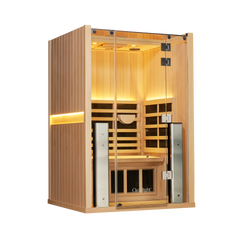
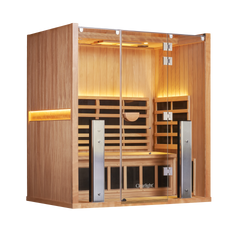
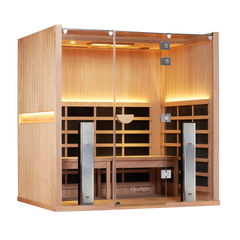
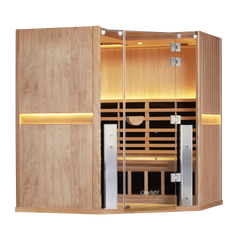
Invest in the Real Sweat Equity with a Clearlight® Infrared Sauna
A Clearlight® sauna is designed for those who see health as a long-term investment, built on consistency, not short-term use.

While many infrared saunas exist on the market, few are built with the same focus on performance, safety, and longevity. With over 25 years of development, Clearlight® has refined its approach to support regular, everyday use as part of a sustainable health routine.
At the core is our patented True Wave® full spectrum infrared technology, designed to deliver effective heat at lower, more comfortable temperatures. This is paired with ultra-low EMF and ELF design principles, supporting safer, repeatable use over time.
Every sauna is also built for durability using premium materials, and is backed by a Lifetime Warranty that reflects long-term confidence in its design and performance.
Explore our infrared sauna range and speak with a Clearlight® Sauna Expert to find the right model for your home and long-term health goals.
References:
-
Elwood, P., Galante, J., Pickering, J., Palmer, S., Bayer, A., Ben-Shlomo, Y., Longley, M., & Gallacher, J. (2013). Healthy lifestyles reduce the incidence of chronic diseases and dementia: evidence from the Caerphilly cohort study. PloS one, 8(12), e81877. https://doi.org/10.1371/journal.pone.0081877
- World Health Organization. (2022). Noncommunicable diseases progress monitor 2022. https://www.who.int/publications/i/item/9789240047761
- Liu, C., Yavar, Z., & Sun, Q. (2015). Cardiovascular response to thermoregulatory challenges. American journal of physiology. Heart and circulatory physiology, 309(11), H1793–H1812. https://doi.org/10.1152/ajpheart.00199.2015
- Laukkanen, T., Khan, H., Zaccardi, F., & Laukkanen, J. A. (2015). Association between sauna bathing and fatal cardiovascular and all-cause mortality events. JAMA internal medicine, 175(4), 542–548. https://doi.org/10.1001/jamainternmed.2014.8187
- Imamura, M., Biro, S., Kihara, T., Yoshifuku, S., Takasaki, K., Otsuji, Y., Minagoe, S., Toyama, Y., & Tei, C. (2001). Repeated thermal therapy improves impaired vascular endothelial function in patients with coronary risk factors. Journal of the American College of Cardiology, 38(4), 1083–1088. https://doi.org/10.1016/s0735-1097(01)01467-x
- Hussain, J. N., Greaves, R. F., & Cohen, M. M. (2019). A hot topic for health: Results of the Global Sauna Survey. Complementary therapies in medicine, 44, 223–234. https://doi.org/10.1016/j.ctim.2019.03.012
- Ahokas, E. K., Ihalainen, J. K., Hanstock, H. G., Savolainen, E., & Kyröläinen, H. (2023). A post-exercise infrared sauna session improves recovery of neuromuscular performance and muscle soreness after resistance exercise training. Biology of sport, 40(3), 681–689. https://doi.org/10.5114/biolsport.2023.119289


